


Solar Covers for Pools
Here is a comprehensive selection of solar pool covers in various sizes, shapes, and quality tiers. Naturally, these come with our signature, unbeatable best-price guarantee. Further down the page, you will find a practical buyer’s guide that explains the differences and unique advantages of various models.
Solar Pool Covers: 29 items
-
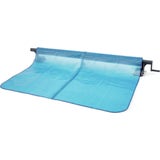
Intex Roll-up Device for Solar Cover
- For rectangular frame pools
- For pool width 274 - 488 cm
- Easy to assemble
-
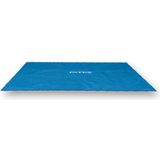
Intex Solar Bubble Film for Frame Pool Ultra Quadra, 549 x 274 cm
- Easy to use
- Increases water temperature by 3-5°C
- For a longer pool season!
-
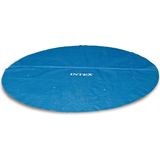
Intex Solar Nub Film for Easy and Frame Pools, Ø 366cm
- Easy to use
- Increases water temperature by 3-5°C
- For a longer pool season!
-
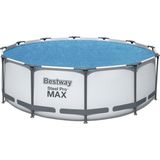
Bestway Flowclear™ PE Solar Pool Cover Ø 356 cm
- Round & blue
- Self-floating
- Helps maintain water temperature
-
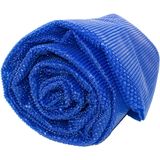
Steinbach Solar Bubble Film for Rectangular Pools, 700 x 350cm
- Easy to use
- Increases water temperature by 3 - 5°C
- For a longer pool season!
-
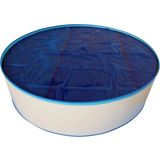
Steinbach Solar Bubble Film for Round Pools, Ø 500cm
- Easy to use
- Increases water temperature by 3 - 5°C
- For a longer pool season!
-
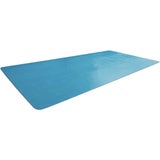
Intex Solar Cover for Ultra Frame Rectangular 400 x 200 cm
- With air-filled nubs
- 3-5 °C warmer water
- Can be cut to size
-
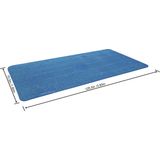
Bestway PE Solar Cover - 380 x 180 cm, Blue, Square
- Ideal for 404 x 201 cm pools
- Increase water temperature
- Less heat loss
-
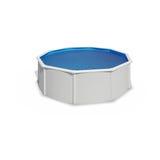
CF. Group Solar Cover Round Classic Blue Ø 360 cm, 300 µ
- Heating and insulating function
- Robust thickness: 180 µ
- Dimensions: 360 cm
-
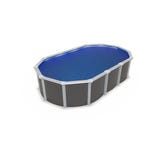
CF. Group Solar Cover Oval Classic Blue 630 x 370 cm, 300 µ
- Heating and insulating function
- Robust thickness: 300 µ
- Dimensions: 630 x 370 cm
-
-
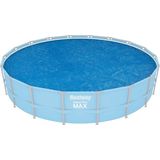
Bestway Flowclear™ PE Solar Pool Cover Ø 527 cm
- Round & blue
- Simply place on the water
- Durable material
-
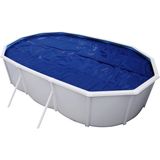
Steinbach Solar Bubble Film for Oval Pools, 730 x 370cm
- Easy to use
- Increases water temperature by 3-5°C
- For a longer pool season
-
CF. Group Solar Cover Round Classic Blue Ø 700 cm, 300 µ
- Heating and insulating function
- Robust thickness: 300 µ
- Dimensions: 700 cm
-
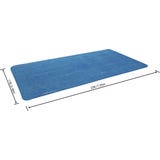
Bestway Solar Pool Cover 703 x 336 cm
- Heats pool water using solar power
- Stops heat loss & keeps out falling debris
- Robust, durable & floating
-
CF. Group Solar Cover Round Classic Blue Ø 460 cm, 300 µ
- Heating and insulating function
- Folienstärke: 180 & 300 µ
- Dimensions: 460 cm
-
CF. Group Solar Cover Round Classic Blue Ø 600 cm, 300 µ
- Heating and insulating function
- Robust thickness: 300 µ
- Dimensions: 600 cm
-
CF. Group Solar Cover Oval Classic Blue 730 x 370 cm, 300 µ
- Heating and insulating function
- Robust thickness: 300 µ
- Dimensions: 730 x 370 cm
-
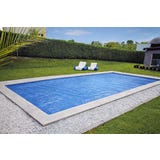
CF. Group Solar Cover Rectangular Classic Blue 800 x 400 cm, 300 µ
- Heating and insulating function
- Robust thickness: 300 µ
- Dimensions: 800 x 400 cm
-
CF. Group Solar Cover Rectangular Classic Blue 1000 x 500 cm, 300 µ
- Heating and insulating function
- Robust thickness: 300 µ
- Dimensions: 1000 x 500 cm
-
CF. Group Solar Cover Rectangular Classic Blue 900 x 400 cm, 300 µ
- Heating and insulating function
- Robust thickness: 300 µ
- Dimensions: 900 x 400 cm
-
CF. Group Solar Cover Oval Classic Blue 550 x 360 cm, 300 µ
- Heating and insulating function
- Robust thickness: 300 µ
- Dimensions: 550 x 360 cm
-
CF. Group Solar Cover Round Classic Blue Ø 550 cm, 300 µ
- Heating and insulating function
- Robust thickness: 300 µ
- Dimensions: 550 cm
-
CF. Group Solar Cover Rectangular Classic Blue 900 x 500 cm, 300 µ
- Heating and insulating function
- Robust thickness: 300 µ
- Dimensions: 900 x 500 cm
-
CF. Group Solar Cover Oval Classic Blue 800 x 400 cm, 300 µ
- Heating and insulating function
- Robust thickness: 300 µ
- Dimensions: 800 x 400 cm
-
CF. Group Solar Cover Round Classic Blue Ø 500cm, 300 µ
- Heating and insulating function
- Robust thickness: 300 µ
- Dimensions: 500 cm
-
CF. Group Solar Cover Rectangular Classic Blue 700 x 400 cm, 300 µ
- Heating and insulating function
- Robust thickness: 300 µ
- Dimensions: 700 x 400 cm
-
CF. Group Solar Cover Rectangular Classic Blue 700 x 350 cm, 300 µ
- Heating and insulating function
- Robust thickness: 300 µ
- Dimensions: 700 x 350 cm
-
CF. Group Solar Cover Rectangular Classic Blue 600 x 300 cm, 300 µ
- Heating and insulating function
- Robust thickness: 300 µ
- Dimensions: 600 x 300 cm
Still confused about the pros and cons of solar pool covers? Looking for expert tips to get the absolute best performance out of them? Then you’ve come to the right place!
The Benefits of Using a Solar Pool Cover
Deploying a solar cover allows you to reap multiple rewards simultaneously. Briefly summarised, here is what a high-quality cover delivers:
- Reduces evaporation by up to 90%, which significantly minimises heat loss.
- Acts as an upward thermal insulator, especially throughout the night.
- Both effects mean that your primary pool heating systems can be downsized—consequently slashing your energy bills.
- Keeps a substantial amount of debris and dirt out of your pool water.
- Depending on its thickness and transparency level, it can also lower chemical consumption and inhibit algae growth.
Key Differences Between Models
The market for solar pool covers is vast. However, there are specific features that set individual solar covers apart:
I. Shape of the Solar Cover
Solar covers are tailored to match standard pool designs. You will easily find round, rectangular, oval, and even figure-eight configurations.
II. Thickness and Rigidity
Budget-friendly options typically feature material thicknesses between 120 and 180 microns (approx. 0.12 to 0.18 mm). Intex solar covers are classic examples of this category. Premium solar covers start at around 300 microns, with most topping out at 500 microns—for instance, Steinbach solar covers sit at the 300-micron mark. Some manufacturers, particularly generic brands, use exceptionally soft materials. The downside: while these models are highly economical, they are incredibly sensitive to chlorine. A thin cover heavily reliant on plasticisers generally faces a severely limited lifespan. We exclusively stock solar covers built for long-term durability that avoid excessive chemical softening. Conversely, some brands engineer ultra-thick covers with minimal plasticisers. While extremely long-lasting, their rigidity can be frustrating for the first few weeks after unboxing or seasonal storage. This stiffness can cause waterlines to pool on top of the cover, creating minor thermal bridges that slightly compromise heating efficiency.
III. Level of Transparency
Solar covers come in fully transparent, semi-transparent, and completely opaque options. Semi-transparent blue models are highly popular and widely used. This is because blue integrates beautifully into garden pool setups, and complete opacity sacrifices a bit of thermal performance when the sun is shining. On the flip side, completely clear covers boast the absolute best thermal gains. So why do light-blocking, opaque covers exist? Because they significantly reduce disinfectant consumption and combat algae growth. UV rays rapidly degrade chlorine; by blocking these rays from entering the pool water, you eliminate the need to add extra chlorine simply to offset sunlight losses. Opaque covers are particularly exceptional at stabilising pool chemistry during peak summer heat waves. As a rule of thumb, we advise both beginners and experienced owners to avoid completely transparent covers; while they heat the water quickly, they offer no support for water stability. In our expert opinion, semi-transparent solar covers represent the perfect strategic compromise between heating efficiency and chemical stability.
How Much Heat Gain Can You Expect?
While transparency levels cause slight variations, you can realistically expect a temperature increase of 1.5°C to 3°C over several days under average conditions. This gain is primarily driven by the cover's thermal insulation properties. In fact, reducing evaporation is the single most powerful mechanism at play. Think of how we cool down during exercise: we sweat, and as that moisture evaporates, it carries heat away with it. Humans use evaporation to cool down, and this exact physical process happens to your pool water. By utilising a solar cover, you cut this cooling evaporation by up to 90%! Furthermore, the integrated air bubbles provide crucial insulation. On chilly nights, they ensure that valuable heat stays trapped within your frame pool or steel wall pool rather than radiating away. Over time, these cumulative savings yield impressive temperature boosts.
Will the Temperature Always Increase?
Relatively speaking: yes! In absolute terms: not always. Under neutral or optimal weather conditions, a solar cover helps you achieve higher absolute water temperatures. However, during poor weather spells, it is already a massive success if your pool water simply maintains its temperature or experiences minimal loss.
What Constitutes Poor Conditions?
Normally, daytime sunshine feeds an abundance of thermal energy into the pool, ideally paired with ambient air and ground temperatures above 20°C. But during prolonged overcast periods, solar energy input can plummet by 90% to 95%. TO add this, high winds and cool ambient temperatures cause warm pool water to lose heat rapidly. Without a solar cover, this heat loss can be catastrophic - even over a single night. With a bit of bad luck, a pool can drop by as much as 8°C. A solar cover does not generate energy; it manages it. When energy input stalls while heat escapes, the water temperature will inevitably drop. A solar cover acts as a buffer to slow this decline when the weather takes a turn for the worse. Consider this real-world comparison during a sudden cold snap: a) Pool 1 (No Cover): Starting at 28°C, a poor weather front arrives with minimal sun, high winds, and freezing northern air. Within two days, the water temperature crashes to 19°C. b) Pool 2 (With Solar Cover): Under the same conditions and starting at 28°C, the water temperature only drops to 22°C over three days. While heat was still lost, the covered pool remains significantly warmer, and the cooling process was dramatically delayed. Once the weather breaks, this pool starts from a vastly superior baseline.
The Long-Term Relative Advantage:
Let's continue the scenario: a warm weather front arrives with clear skies, higher temperatures, and milder nights. Over three days, Pool 1 gains 5°C, bringing it up to 24°C. Meanwhile, Pool 2 leverages its hard-fought head start of 22°C. By day two, it hits 25°C, and by day three, it reaches a luxurious 27°C. As you can see, a pool equipped with a solar cover holds the advantage in virtually every scenario. To judge them fairly, always compare a covered pool against an unprotected one. Don’t forget that a solar cover also brings your pool up to swim-ready temperatures much earlier in the season, giving you far more opportunities to enjoy your pool. What more could you ask for?
Are Manufacturer Claims Inaccurate?
While manufacturer metrics vary wildly, some brands base their data on highly specific, idealised scenarios. This is particularly true when additional heating systems, such as pool heat pumps, are introduced, as a solar cover exponentially amplifies their efficiency. Depending on your exact configuration, those manufacturer claims can indeed be accurate. The thermal values we outline in this guide are intentionally conservative and virtually guaranteed in real-world practice. In short: a 1.5°C to 3°C gain is achievable in almost any standard setup, whereas the 5°C to 8°C jumps advertised by some brands require very specific, optimal conditions.
-
Ireland: Free standard delivery from € 99,90
-
Free
returns -
We operate in a
climate-conscious manner. Secure payments
with SSL encryption technology